

MLB Extensions: The Same Bet, Made Earlier
Why teams are committing earlier and what they're giving up the process.

It’s extension season!
Spring Training provides a perfect environment to explore long-term pacts, so it isn’t surprising to see some of the conversations result in new contracts.
What is surprising is what these deals look like — and how early they’re happening — because they’re quite different than the extensions of the past.
Teams are handing out larger contracts to pre-arbitration players than ever before. Only 15 pre-arbitration contracts have guaranteed at least $80m, and six of those deals have been signed in the last calendar year. And similarly, eight of the 19 extensions for players with fewer than 75 days of Major League service have come in the past two years.
The challenge with signing deals earlier is straightforward: there’s less information to work with. Minor League performance can tell us a lot about what a player will be in the future, but it’s no substitute for playing in the big leagues. There we get a better understanding of how skills will translate, how the league will respond, and how the player will adjust and adapt.
At the same time, the cost of these deals suggests that teams are pricing players near their best case outcomes.
Teams are making same type of bets they’ve always made — but they’re making them earlier, with less certainty, and less room for error.
How did we get here?
The practice of giving multi-year agreements to players prior to arbitration dates back to Jon Hart and the Cleveland Guardians in 1993 and 1994. From there, teams began copying and riffing on the strategy, leading to a new category of contract that hadn’t previously existed.
Around 2008, the strategy gained more steam. That year alone, five pre-arb players signed extensions guaranteeing $20 million or more, and two contracts set new records in their respective markets: Ryan Braun’s 8-year, $45 million deal with Milwaukee and Evan Longoria’s 6-year, $17.5 million deal with the Rays. Braun’s deal was the largest for a player with fewer than three years of service, while Longoria’s deal was even more ground-breaking, signed after only seven days in the Major Leagues. No player had ever signed an extension with under a year of service, let alone fewer than 10 days.
Over the past 15 years, teams have signed nearly 70 pre-arbitration extensions with position players.1 When we look at those deals, the initial thing that jumps out is how team-friendly they started out. Over the first five years, there were massively valuable deals for players like Paul Goldschmidt, Jose Altuve, Anthony Rizzo, and Salvador Perez. Deals that traded low guarantees to buy out free agent years and retained flexibility in the form multiple club options. They weren’t all hits — and there was some fortuitous timing in signing players like Goldschmidt and Altuve immediately before they showed up on MVP ballots — but even the worst deals were often closer to neutral than anything.
That’s partially because the dollar figures were so low. From 2012-2016, the median guarantee for extensions was just $28 million. It’s difficult to make bad investments at that level.
The other reason these deals favored teams is they were going to relatively experienced players within the pre-arbitration population. The average service time for extensions signed over the same five-year stretch was more than a year and a half.
Signing players with established track records to low guarantees is a simple, and rather obvious recipe for good contracts (from the team’s point of view).
But there’s a reason they were able to do this. They were signing players who had made very little money to date. We can see that when we look at the amateur signing bonuses for extended players.2
The average signing bonus from 2012-2016 was a little over $450,000; the median was just $90,000 and over half of the extensions were players who signed for less than $100,000. Even adjusting for inflation or league-wide spending, that’s radically different from the last five years where the average signing bonus is more than $2 million and 65% of extensions are with players who signed for at least $1 million.
Earlier extensions often targeted players who hadn’t earned much, making the tradeoff between long-term upside and immediate security straightforward. Rising signing bonuses and structures like the pre-arbitration bonus pool have changed things by putting money in player’s pockets much faster. Players have far more leverage in negotiations.
But MLB is a copycat league, and as teams, players, and agents watched these extensions play out, they saw how valuable they could be. Players still wanted financial stability, only now they demanded higher dollars and earlier commitments to give away upside. Teams saw enough surplus value to be had that they were willing to move on both fronts.3
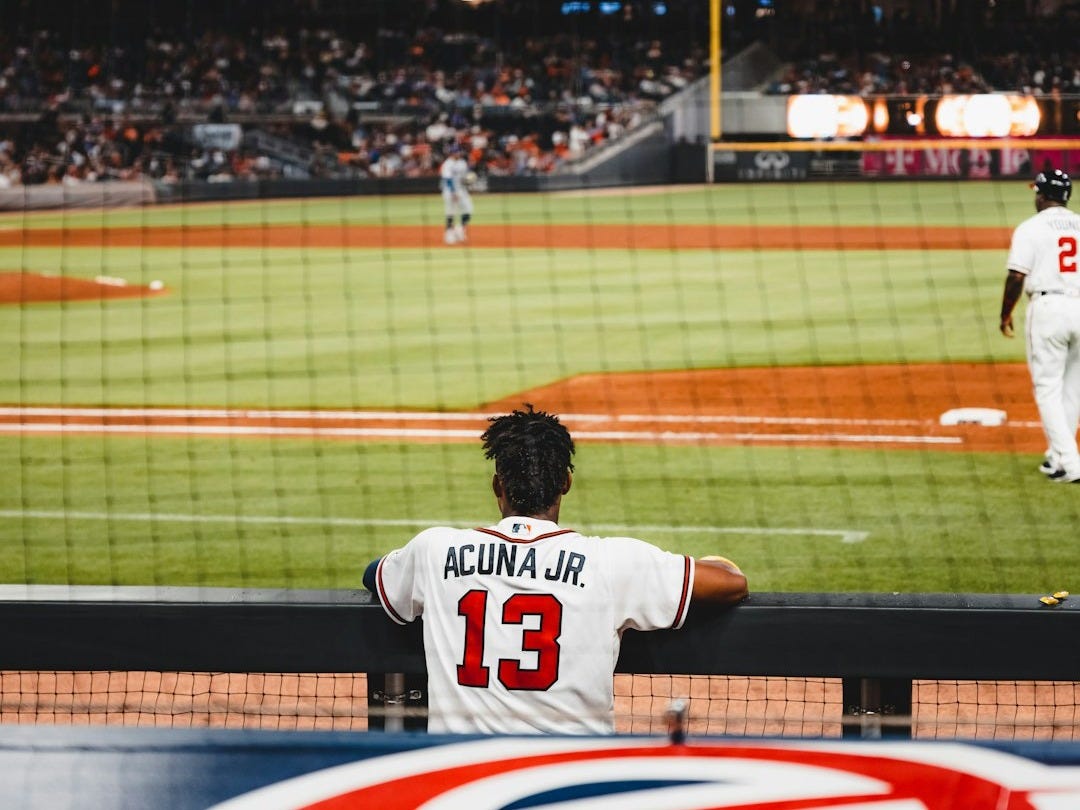
They continued to push the envelope. The best deals were valuable enough to make up for the losers. Christian Yelich, Jose Ramirez, Ketel Marte, Ronald Acuña Jr. — these were all examples of clubs gaining valuable control of star level players through pre-arb extensions.
By the beginning of 2021, the market had little resemblance to the extensions from ten years prior. Fernando Tatis Jr. and Wander Franco’s deals set new markers for length and guarantee, with Tatis’s deal essentially a full-blown free agent contract signed before he began arbitration. Those were followed by more complex extensions for Julio Rodriguez and Bobby Witt Jr., which layered in player opt-outs to preserve upside if they performed well or if the free agent market moved.
Players have demanded more, and teams have largely acquiesced, continuing to increase the dollar amounts and move the commitments earlier — bringing us to the present.
Are the deals being signed today good bets?
The real question is whether the deals being signed today are actually smart investments.
Generally speaking, I’d say no.
The biggest reason is that the baseline contracts for Major League players are incredibly hard to beat. Teams effectively control players for six or seven years at well-below market rates. Players make roughly the league minimum those first few years before entering a performance-based arbitration system that’s seen little growth over time. And if that isn’t enough, the salaries aren’t guaranteed — teams have the right to walk away each year.4
The tradeoff for guaranteeing early years is supposed to be access to free agent seasons at a discount. But recent deals for Konnor Griffin and Colt Emerson imply free agent AAVs of $33 million and $28 million respectively. Those salaries would rank among the top 25-30 players in the league today, and they’re guaranteed six years out with no Major League track record.
Anyone who plays fantasy baseball knows that predicting player performance is tricky. Doing it years in advance, without baseline major league data, adds another layer of difficulty.
The actual performance of these contracts has not been very good, either. It’s a small sample, but after a strong start with deals for Longoria, Moore, and Perez, the extensions for players with less than half a year of service have been underwhelming.
A number of deals have failed, and the early returns on many others aren’t promising.
Even the best looking deals are complicated to judge. Take Corbin Carroll. He has played about as well as possible since signing his extension, but he’s still years away from free agency. Every bit of production he’s provided Arizona would have happened without the extension (at a lower cost).
And if the deals do succeed, there’s still a common pitfall teams can’t seem to avoid. Players who outperform their initial extensions are often rewarded with worse follow-up contracts, cutting into the surplus value that was created. It’s human nature. Teams want to treat their best players fairly, and it’s hard to walk away from the table after a win. Unfortunately, that human nature makes it harder for teams to capture the upside they’re betting on in the first place.
I understand why teams are signing these deals. I do.
I just don’t think they’re valuing their optionality or the information they’re sacrificing nearly enough.
Things can change quickly. Players’ ability levels, the competitive environment, the needs of the club, and the rules of the game may all look very different seven or eight years from now. Unless a team is getting a significant discount on future control, there’s value in waiting and making a more-informed decision later — even if it ends up costing more.
Of course, that assumes the opportunity exists in the future. Extension negotiations aren’t guaranteed to remain on the table. If teams believe they only have one window to act, the decision is more challenging.
For small market clubs, these deals are understandable. They don’t have access to high-end free agents, especially not on shorter term deals. And to compete, they have to take targeted risks and find ways to be comparatively different.5
It’s less clear that the same logic applies to larger market teams. They can afford to gather information and pay for more certain outcomes. The risk-reward calculus doesn’t make as much sense for them.6
The prevailing thought seems to be that early-career extensions are always good decisions for the team. When that meant minimal commitments to relatively established players, that was fair to say. But that’s not the reality anymore.


Data is from Sportrac. They only classify extensions as pre-arbitration if the player is not eligible for arbitration when the contract begins, rather than when it’s signed. The opposite stance is just as valid, but for simplicity I used their designation. Deals like Hanley Ramirez’s 2008 extension (singed May, 2018, beginning in 2019) and Mike Trout’s 2014 extension (signed April 2014, beginning in 2015) won’t show up.
This graph removes Yoan Moncada and Luis Robert Jr. who had very large signing bonuses because they entered Minor League Baseball under different rules and circumstances than the rest of the players. They’re included in other data.
I have no evidence of this, but I have to believe the way that Jon Singleton’s 2014 deal was such an immediate and visible failure affected the market. No one tried a pre-debut extension again until the Phillies signed Scott Kingery in 2018.
Another way to think about these contracts is that teams essentially hold single exercise club options for every year. And the option decision date (the tender deadline) is almost a month later than the option decision date that teams write into for explicit club or player options.
Unsurprisingly the teams that popularized and exploited extensions were Cleveland, Tampa Bay, and St. Louis.
Neither the Yankees or Dodgers have ever signed a pre-arb extension.